
October 6, 2026
Key Insights
- The tax code offers families a variety of saving account vehicles with different advantages.
- Teaching financial habits alongside
- Coordinating these savings strategies with a wealth management plan can offer advantages
Latest from EdgeRock
Questions? Talk to our team.
Find out how truly custom, independent planning can impact your portfolio.
Start a Conversation
Using Tax Efficient Strategies to Kickstart Your Child’s Financial Future
By Grace Allbritten
July 24, 2026 |
By Grace Allbritten
The tax code offers a number of different ways to begin saving toward a child's future. What are the advantages of each? Which one is right for your family?

One of the most common themes we hear from clients is how important it is that their children and grandchildren are set up for long-term financial success. For many, that focus lands on estate planning, particularly what will be left behind and passed on for their benefit.
Others take a more proactive approach, looking to transfer wealth during their lifetime, but typically during the recipient’s highest-earning years. While both approaches have merit, they often overlook one of the most powerful wealth-building principles: time in the market.
Planning Early is Powerful
The Rule of 72 helps illustrate just how powerful that time can be. By dividing 72, by an expected annual rate of return, you can estimate roughly how many years it will take for the investment to double. At a 7% average annual rate of return, money doubles approximately every 10 years. That may sound straightforward, but the real impact becomes clear when you map it out over a child’s lifetime. A dollar invested at birth has the potential to double five or six times before traditional retirement age, while that same dollar invested at age 20 has far fewer doubling cycles ahead of it. Every year of delay is not just one year of growth lost, it’s an entire doubling cycle that may never be recovered.
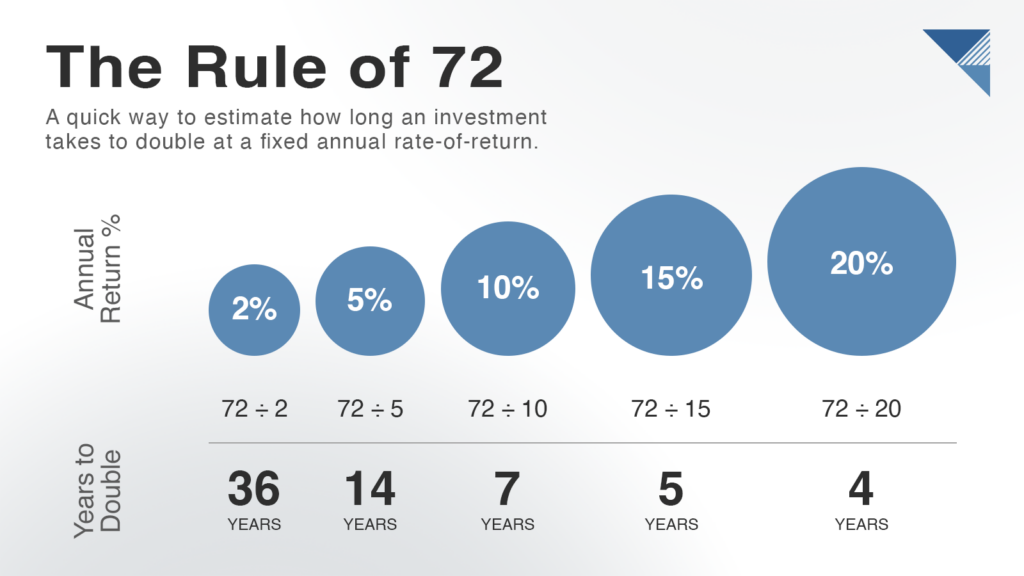
Of course, time alone is only part of the equation. Taxes also play a critical role, as every dollar lost to taxes along the way is a dollar that never gets the opportunity to compound or contribute to overall wealth. Two key components in tax strategy are timing and rate management. The strategies discussed in this article vary in how, when, and at which rates taxes apply.
Some strategies are funded with after-tax dollars and have the potential to shelter growth from taxes entirely, though the use of that growth is subject to timing or use restrictions through qualified withdrawal requirements. Others defer taxation, meaning growth compounds uninterrupted until investments are sold, non-qualified dividends are produced, or distributions are made, at which point they are subject to tax. In either case, the ability to keep more dollars compounding over a longer period of time, and the ability to recognize that income at preferential rates, is a meaningful advantage in building overall wealth. Starting early and doing so within the right tax-advantaged structures are not two separate ideas. They are two sides of the same principle, and together they represent one of the most powerful combinations available for building long-term wealth for the next generation.
Let’s explore some of the most effective tax-advantaged strategies available today to help your children and grandchildren get started on the right foot.
529 Plans: Tax-Advantaged Education Savings
One of the most impactful ways to invest in a loved one’s future is to fund their educational goals. Setting up and contributing to a qualified tuition program, commonly known as a 529 plan, is one of the most effective ways to maximize the funds available for educational use.
A 529 plan is a savings or prepaid tuition program sponsored by a state or educational institution, designed to help families set aside funds for a beneficiary’s qualified expenses at eligible institutions.
Contributions to a 529 plan are not federally deductible, but they do qualify for the annual gift tax exclusion of $19,000 per donor, or up to $38,000 when combined with a spousal gift-splitting election, based on 2026 thresholds. For donors looking to make a more substantial contribution upfront, a five-year superfunding option allows up to five years of annual exclusion gifts to be made in a single year, totaling $95,000 per beneficiary, or $190,000 when combined with spousal gift-splitting. This can be a particularly useful estate planning tool, as it removes a meaningful amount from the donor’s taxable estate while accelerating education funding. Note that a Gift Tax Return on Form 709 may be required for contributions that exceed the annual exclusion, utilize the gift-splitting election, or take advantage of the superfunding option. Additionally, a Generation-Skipping Transfer Tax may apply if the beneficiary is at least 37.5 years younger than the donor, making it important to consult with an advisor for guidance based on your specific circumstances.
The primary tax advantage of a 529 plan is that growth and subsequent withdrawals are tax-free to the extent funds are used for the designated beneficiary’s qualified educational expenses. Account holders can invest contributions across a menu of options, including age-based portfolios that automatically shift toward more conservative allocations as the beneficiary approaches college age. Although 529 plans are most commonly associated with college funding, they can also be used to cover up to $20,000 annually in K-12 tuition at public, private, or religious schools, recently increased from the prior limit of $10,000. Beginning July 5, 2025, professional license and certification costs, along with certain related expenses, were also added as qualified expenses, broadening the utility of these accounts beyond traditional academic settings.
If the beneficiary does not use all of the funds, several pathways exist to redirect them. The beneficiary can be changed to another family member, or unused funds can be rolled into a sibling’s plan without penalty, though gift tax implications may apply and it is important to consult with an advisor before completing those transactions. Beginning in 2024, the SECURE 2.0 Act introduced the ability to roll unused 529 funds into a Roth IRA for the beneficiary, subject to a $35,000 lifetime rollover limit per beneficiary and additional eligibility requirements based on the beneficiary’s earned income, the age of the 529 account, and the age of the funds included in the rollover. Nonqualified withdrawals are permitted but are subject to income tax on the growth portion plus a 10% penalty. Because 529 plans are governed at the state level, some plans may impose additional restrictions around rollovers, beneficiary changes, or what expenses qualify as educational, making it worthwhile to review the specific rules of the plan before making decisions.
Custodial Roth IRA: Building Retirement Wealth from an Early Age
For children and teenagers with earned income for the year, a custodial Roth IRA is one of the most powerful long-term wealth-building tools available. The account functions like a standard Roth IRA, funded with after-tax contributions that grow tax-free across a broad range of investment options including stocks, mutual funds, and ETFs.
The strategic advantage of a Roth account is rooted in timing. Contributions are made with after-tax dollars, meaning the child pays tax on that income now, typically at very low or even zero effective tax rate given their limited earnings. From that point forward, the account grows tax-free, and qualified withdrawals of earnings, typically during retirement, are tax-free as well. Contributions can be withdrawn at any time without tax or penalty, providing an additional layer of flexibility.
Mapping this against the Rule of 72 makes the case clearly. A $1,000 contribution made at age 16, growing at an average annual rate of return of 7%, has the potential to double roughly five times by age 66, growing to approximately $32,000. That same $1,000 contributed at age 30 would have only about three doubling cycles over the same period, growing to roughly $8,000. The difference highlights not only how significantly time amplifies long-term growth, but also how powerful it is to pair that time horizon with a tax-advantaged structure. In a Roth IRA, that growth occurs entirely tax-free, and contributions are made when the child’s effective tax rate is presumably far lower than it will be during their peak earning years. The result is a compounding advantage that grows more valuable with every year it is given to run.
The child is designated as the beneficial owner of the account, while a parent or guardian serves as the custodian and retains control and management authority until the child reaches the age of majority, typically 18 or 21 depending on the state, at which point the assets transfer into a Roth IRA held solely in the child’s name.
To open and contribute to a custodial Roth IRA, the child must have documented earned income for the year. Formal employment is not required. Self-employment activities such as lawn care or babysitting can qualify, though these arrangements may carry additional self-employment tax considerations worth discussing with an advisor. For 2026, the maximum annual contribution is the lesser of $7,500 or the child’s total earned income for the year.
UGMA and UTMA Accounts: Flexible Custodial Investing
Uniform Gifts to Minors Act and Uniform Transfers to Minors Act accounts, commonly referred to as UGMA and UTMA accounts, are custodial brokerage accounts that allow assets to be managed on behalf of a minor until they reach the age of majority, typically 18 or 21 depending on the state. These accounts offer fewer tax advantages than other strategies discussed in this article, but provide broad flexibility in how funds are used, with no restrictions limiting withdrawals to specific qualified purposes.
One of the more distinctive benefits of UGMA and UTMA accounts is their value as a financial education tool. Because the child is the beneficial owner of the account, these accounts can provide age-appropriate exposure to different investment types and serve as a practical foundation for building financial literacy and healthy money habits over time.
There are important tax considerations to evaluate before funding these accounts. A child’s unearned investment income above $2,700 may be subject to the kiddie tax, meaning it is taxed at the parent’s marginal rate rather than the child’s lower rate. This can meaningfully reduce the tax efficiency of these accounts, particularly for families with significant investment income flowing through them. Additionally, once the child reaches the age of majority, they gain full and unrestricted control of the account, which may not align with the original intent of the funds or the family’s expectations around timing and readiness.
UGMA and UTMA accounts can play a useful role when flexibility is a priority and education-specific or retirement-specific accounts are not the right fit. However, maintaining tax efficiency and avoiding unintended reporting obligations requires careful consideration of relevant income thresholds and investment selection. Consulting with an advisor before funding these accounts is an important step in ensuring they are structured in a way that serves the family’s broader goals.
Section 530A Accounts: A New Option for Long-Term Wealth Building
Section 530A accounts, commonly referred to as Trump accounts, represent one of the newest additions to the family wealth planning toolkit. Unlike a custodial traditional or Roth IRA, Trump accounts do not require the beneficiary to have earned income, making them accessible to virtually any child regardless of their work history. However, to the extent a child is eligible for a traditional or Roth IRA, these accounts are generally more advantageous long-term.
Trump accounts can be established for any eligible U.S. citizen child before the year they turn 18. For children born between January 1, 2025 and December 31, 2028, the federal government may provide a one-time $1,000 pilot contribution deposited directly into the account. Families are not required to make an initial contribution to receive this funding, but the account must be properly established using IRS Form 4547. Additional contributions from family members and others become permissible starting July 4, 2026.
Total annual contributions are capped at $5,000 per beneficiary across all contributors, requiring coordination when multiple parties are involved. During the accumulation phase, investments are limited to eligible mutual funds or exchange-traded funds tied to U.S. equity indexes. This narrower investment menu is more restrictive than those available in 529 plans or custodial Roth IRAs.
Once the beneficiary reaches age 18, the account transitions to operate similarly to a traditional IRA, ending the dedicated growth period. Funds can then be accessed, but the tax treatment differs from Roth accounts. Generally, withdrawals are subject to ordinary income tax, except for amounts representing original after-tax contributions. Distributions taken before age 59½ may also incur a 10% early withdrawal penalty, though exceptions exist for certain uses such as qualified higher education expenses and up to $10,000 toward the purchase of a first home. Working with an advisor at the time of withdrawal can help ensure funds are accessed in the most tax-efficient way possible.
One planning consideration worth noting relates to gift and generation-skipping transfer tax treatment of contributions. Under current statutory language, contributions to Trump accounts may not qualify for the annual gift tax exclusion that applies to many other types of gifts. If that interpretation holds, contributions could count against a donor’s lifetime estate and gift tax exemption rather than being excluded from it entirely. This area of the law remains unsettled and the IRS and Treasury have not yet issued definitive guidance. Until that guidance is available, families considering meaningful contributions to a Trump account should speak with a tax advisor before proceeding.
Teaching Financial Habits Alongside the Vehicles

The financial value of these accounts is only half the equation. Structuring them well sets up the mechanics of wealth transfer, but mechanics alone don’t prepare a child to handle what they inherit. The real return comes from pairing the accounts with financial education—turning a set of balances into a set of lessons. The points below outline how intentional involvement can help a child grow into a capable steward of the assets, not just a recipient of them.
- While these accounts provide strong tax advantages, their effectiveness is significantly amplified with intentional financial education.
- Involving children in age-appropriate discussions about their accounts, such as reviewing balances or explaining investments and growth, can foster understanding and ownership.
- Children who understand why an account exists, what it is designed to do, and how the underlying investments work are far more likely to make sound decisions when they eventually take control of those assets.
- Ultimately, the goal is not just to transfer wealth, but to equip the next generation with the skills to manage and grow it responsibly.
The Value of Coordinated Tax and Financial Planning
No single strategy exists in a vacuum. The most effective approach integrates multiple tools in a coordinated way, aligned with a family’s broader financial and estate planning goals. A family might prioritize 529 contributions for education funding, supplement with a custodial Roth IRA to capture earned-income opportunities, and use taxable custodial accounts for added flexibility. Because these tools interact, the tax considerations—gift tax rules, generation-skipping transfer tax rules, income shifting, and long-term capital gains planning—should be evaluated holistically rather than one at a time.
This is where professional guidance earns its keep. Working with a tax and financial advisor helps ensure the strategies are implemented efficiently, avoiding unintended consequences while maximizing long-term benefits. Thoughtfully structured, these tools work together to create a powerful foundation—leveraging time, tax efficiency, and disciplined saving to meaningfully enhance a child’s financial future.
Past performance is not indicative of future results. The material above has been provided for informational purposes only and is not intended as legal, tax, or investment advice or a recommendation of any particular security or strategy. The investment strategy and themes discussed herein may be unsuitable for investors depending on their specific investment objectives and financial situation. Information obtained from third-party sources is believed to be reliable though its accuracy is not guaranteed, and EdgeRock Wealth Management, LLC makes no representation or warranty as to the accuracy or completeness of the information, which should not be used as the basis of any investment decision. Information contained on third party websites that EdgeRock Wealth Management, LLC may link to is not reviewed in their entirety for accuracy and EdgeRock Wealth Management, LLC assumes no liability for the information contained on these websites. Opinions expressed in this commentary reflect subjective judgments of the author based on conditions at the time of writing and are subject to change without notice. No part of this material may be reproduced in any form, or referred to in any other publication, without express written permission from EdgeRock Wealth Management, LLC.
Related Posts


Digging beneath the surface of the market
May 6, 2025




About the Author
Related Posts

Understanding Roth Contributions vs. Roth Conversions
November 25, 2024


Read more Insights